The Takeaway: A community-led resilience hub equips vulnerable populations with the trust, education, and tailored resources needed to prepare for and recover from disasters.
Overview
Building community resilience in the face of natural hazards and disasters requires meeting residents where they are with immediate support and accessible education. The Delaware Resilience Hub provides vulnerable communities in Wilmington with hands-on disaster preparedness, extreme heat relief, and essential emergency supplies. Learn how founder Stacey Henry built a grassroots, community-driven network from her kitchen table into a vital hub for disaster response and youth engagement.

Lessons Learned
- Never assume partnership agreements. Have explicit conversations about relationships between various members of the project team and outline expectations and roles for everyone involved. After some initial discussion, the Delaware Resilience Hub developed a memorandum of understanding with the Coastal States Organization at the onset of the grant.
- Relationship-building takes time! Conversations don’t always need a strict time limit or end goal. If there’s interest and the ability to chat and get to know each other as people, take the time to do it. It makes working together much more enjoyable and collaborative.
- Be creative, particularly in the face of unexpected problems. The purpose of a resilience hub is to respond to community-identified needs, so funding sources that allow for flexibility in solutions to meet those needs are incredibly important.
- Partner with pre-existing service providers and institutions. The resilience hub conducted numerous workshops in partnership with senior living facilities, reaching a large number of vulnerable elderly individuals who already had a trusted relationship with the staff at their facilities.
- Meet the community where they are at. Visiting senior living facilities and community spaces, such as the Police Athletic League, where parents often pick up their kids from after-school programs, and taking the mobile solar unit directly to neighborhood events are all effective ways to reduce the burden of attendance. Accommodations such as child-friendly activities, food, and transportation reimbursement are also great ways to ensure the community can attend.
The Process
Background
In September of 2021, remnants of Hurricane Ida reached the northeastern United States, leaving behind significant flooding. One place in particular, Wilmington, Delaware, saw these impacts exacerbate an existing issue of nuisance flooding, particularly affecting low-income residents.
Families were left to evacuate at the last minute, sometimes through windows, during the largest flood in 200 years. Some 237 families were displaced, with little to no temporary or permanent housing alternatives. These families were relocated to dry areas after evacuation, but there was no coordination or plan for what came next.
Stacey Henry, a resident of Wilmington, was concerned, especially when she realized these people were left without any direction. She thought to herself, “Wait, I see people on TV getting assistance for other disasters, why isn’t that happening here?” Not only was there a gap in infrastructure and resilience projects in the city, but there was also a lack of education to help residents and decision-makers understand how to mitigate future storm impacts.
Establishing the Delaware Resilience Hub
There were no immediate resources to help people respond to and recover from the storm because it took two months for the storm to be declared a major disaster. During this gap, relationships between the city, state, and community partners helped establish better protocols for the future. The Delaware Resilience Hub was created to help residents have access to disaster preparedness education and resources.
“I started the hub at my kitchen table with a few friends,” says Stacey.
She began by gathering the contact information for all of the families who had needed to evacuate when she noticed no one else was doing this. This allowed her to stay in contact with these families, which came in handy after an article was published on the front page of the local newspaper, drawing folks from around the country who were interested in donating. So many donations were coming in that she convinced her son to keep a shed to store all of the supplies for the many displaced families.

The first necessary supplies Stacey sourced were diapers, formula, bottles, and baby food.
“People would laugh [at these requests] being the first asks, but how are you supposed to help parents if their babies haven’t eaten all day or had any diapers changed?” she notes.
From there, once families were finally placed in hotels as temporary housing, she brought food daily and used that time to learn more about them. Stacey gathered information like how many children were in the family, their ages, who were elderly, and whether anyone had disabilities or additional health-related needs, such as medications. This allowed her to connect the needs she was finding with the donated supplies coming in.
Training, Education, and Preparing for the Future
The hub’s members have all been trained as community emergency response teams (CERT) through the Federal Emergency Management Agency (FEMA), which is designed to ensure community members are trained and available to work with emergency responders to help communities during disasters. Youth programming is part of the hub’s work, and many youth volunteers are CERT-certified themselves. Stacey is hoping to secure funding this summer to pay these younger volunteers for their time. The program has been so successful that a current volunteer, now studying at a Delaware University, hopes to start a satellite program to help students build resilience beyond Wilmington.

While progress is being made in running the hub, Stacey is still often the only civilian in the room during important meetings on resilience planning or emergency preparedness. She is so critical to the hub’s work because she has the pulse of the community and can work with other organizations or government departments interested in resilience work in Wilmington.
From the start, Stacey knew the community trusted her, and she has shown, time and again, that she is an advocate for the people being helped by the hub and those who will be in the future. She is driven to support her community because, as she says, “When I am doing this work, I wake up every day with a purpose to serve people.”

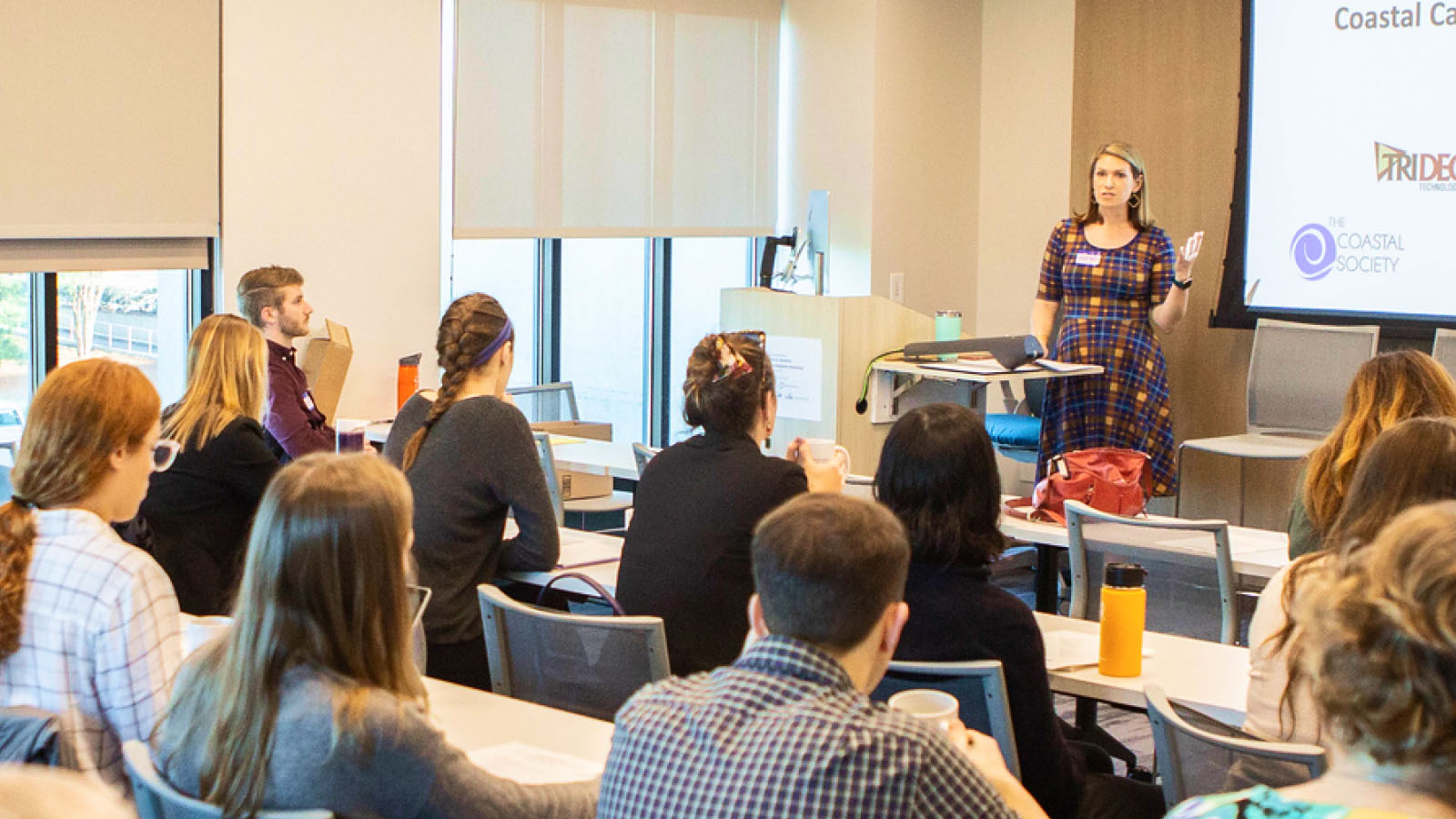
Beyond providing material support during crises, the hub also educates community members to prepare for future disasters. These educational opportunities often target the most vulnerable populations, including low-income and aging residents. The hub focuses on meeting their needs by traveling to those who need the education and then tailoring the program to fit the audience. These training opportunities are focused on actionable emergency preparedness through supplies and information sessions or workshops.

While Ida is an example of an event-based catastrophe, residents' growing concern about heat is another resilience topic Stacey is looking to address. The resilience hub does not yet have its own location to provide a cooling center for residents, but a local church is meeting that need in partnership with the resilience hub until then. The station will not only provide cool air but also water and cooling snacks.
For future disaster events like the flooding from Ida, Digital Coast Connects funding was used to purchase a mobile, solar-powered trailer that will assist the hub with disaster relief by enabling it to directly reach communities in need. The funding was also used to create and distribute emergency supply kits in advance of disasters. Because much of the hub’s work centers on education, the funding was used to support additional incentives and accessibility resources, including energy stipends and transportation reimbursements.
-
Examples of what may be included in distributed emergency supply kits
Next Steps
The hub's near-term focus will continue to be extreme heat. Stacey has mentioned that they are starting with a heat symposium to get the word out about the hazard and to engage others in heat resilience across the state. She hopes that not only will more places provide shelters during extreme heat events, but also that the discussion will help create a more centralized online hub to provide the resources residents need, rather than leaving them to hunt for information on their own. This will also be an opportunity to educate attendees on what to do during these events, like properly using a fan to draw air out rather than blow in hot air.
One area of focus on heat outside of the symposium is supporting the city’s homeless encampment—a first for the area—during these events. Not only does she want to provide transportation to local cooling centers for these families, but also high-quality coolers to store food or temperature-sensitive medications. Frequent ice deliveries would give families access to cold water and healthier food options, since many rely on shelf-stable foods, which are often less healthful due to the lack of refrigeration. Stacey says that these coolers would be provided to families and that, if they secure permanent housing, they could take the coolers with them.
Some longer-term next steps include securing larger, unrestricted funding specifically for the resilience hub's capacity-building. Stacey and her team are all unpaid. They might require (and do deserve) to be compensated for their work, especially as the reach of the resilience hub continues to expand. A permanent location for the hub’s headquarters is under construction, with retrofits and upgrades that include a backup generator, electric vehicle charging stations, and solar panels.
Overall, Stacey and the rest of the volunteers at the resilience hub want to make sure “people are before the problem” by focusing on what the community needs rather than the climate hazard.