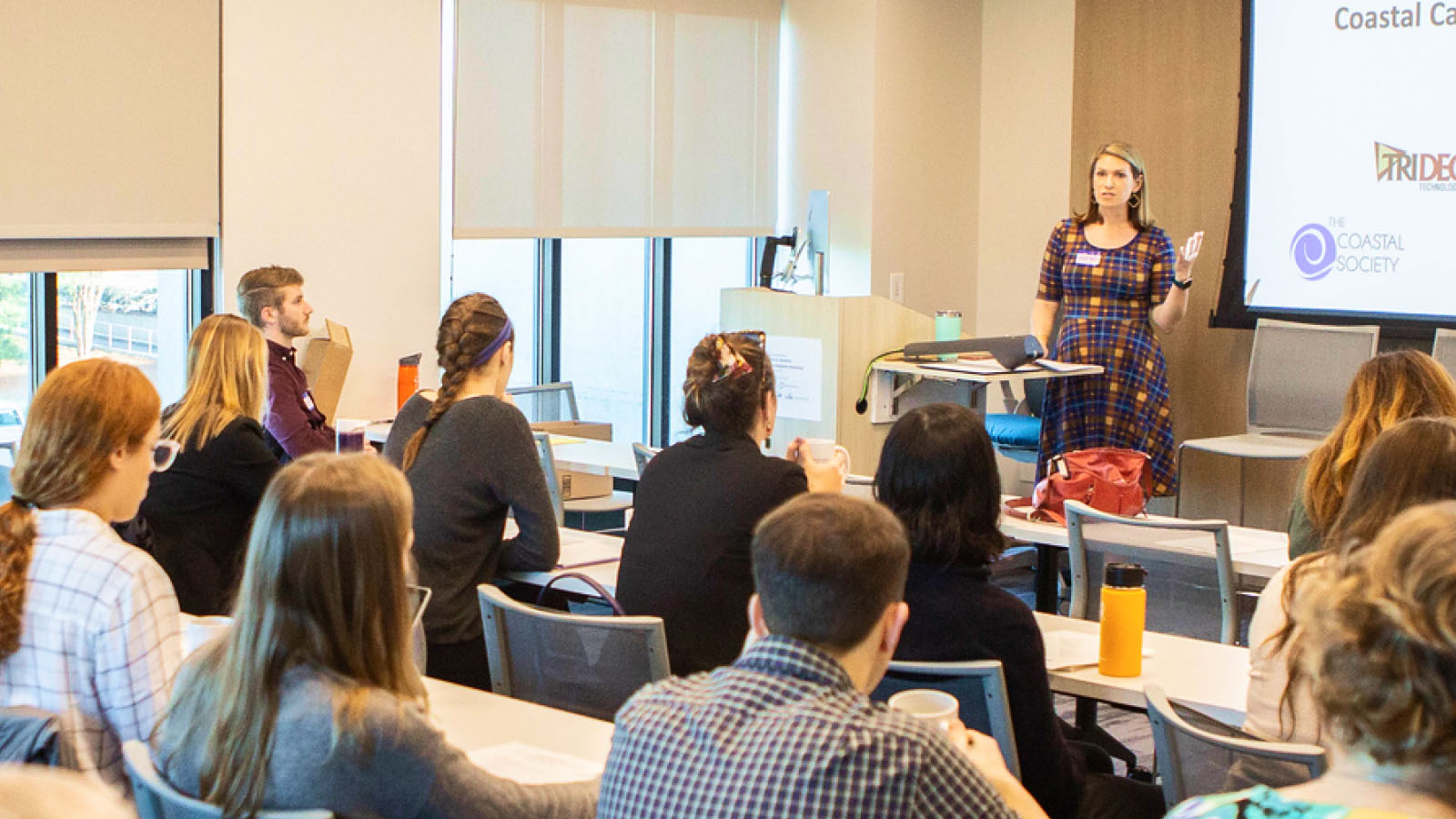
The Takeaway: Applying risk communication techniques for difficult conversations about flood preparedness.
Overview
Jennifer McCulloch, a flood mitigation program coordinator with Morris County, New Jersey, was tasked with developing a flood acquisition program after Tropical Storm Irene caused record flooding. When she began reaching out to municipal officials to participate in the program, she learned that towns were reluctant to acknowledge their flood risks. By using good risk communication techniques, including sharing stories and tailoring the conversation to meet her audience’s needs, McCulloch helped local officials see the importance of flood acquisition, and the majority ultimately chose to participate in the program.

Lessons Learned
- Community officials may be resistant to talking about buyouts because they are worried about lowering property values. One helpful way to start the conversation is to remind them that the goal is to move residents and first responders out of harm’s way.
- Know your audiences and adapt efforts to match their goals. Certain officials will be motivated by reducing costs, while others will be more motivated by public safety improvements or quicker recovery times from flood events.
- Pay attention to how the audience is reacting to the presentation. If you see eyes glazing over, try another approach. Use facts and figures to drive the point home, not as the majority of your presentation. Avoid overly technical terms or acronyms.
- Take the heavy lifting off the applicants’ shoulders. When developing a flood acquisition program, streamline the process, shepherd them through, and check that paperwork is done correctly the first time.
- Offer a buyout while the mud is still wet in the basement. People who live near water often have short memories of the effects of flooding. Move quickly to acquire properties before owners start rebuilding or their homes are foreclosed on, or it’s highly unlikely that the acquisition will occur.
- Make sure a subject matter expert is included on the team when developing a buyout program. This helps to ensure that the process is designed correctly and opportunities are not missed.
- Navigating a buyout process is complicated and emotional, especially for people who have just been through a disaster. It’s important to let people express their emotions and not take criticisms personally.
- Acknowledge homeowners’ experiences and concerns. Homeowners may want to place blame for flooding on others. In Jennifer’s case, more than one homeowner blamed the county for allowing residences to be built in the floodplains decades ago. She found that acknowledging the past and then moving on to the future was helpful. One sample response: “You’re right. We didn’t know 50 years ago what we know now about building in the floodplains. That’s why we have this program to help you get a fresh start.”
- Provide a comprehensive program for those most in need. In many of the most flood-prone communities, homeowners may not be financially savvy or might lack the income to hire experts. Morris County developed its program to ensure that those with the least resources would be given soup-to-nuts attention throughout the process.
- Foreclosure doesn’t have to mean “no deal.” Foreclosure is a real threat, especially given the length of the buyout process. Once a home is foreclosed on, the acquisition process typically stops. However, Morris County continues to work with towns and banks, encouraging them to give homeowners extensions for the buyout to occur, or making a post-foreclosure buyout offer to the bank.
The Process
Tropical Storm Irene caused record-level flooding in Morris County, New Jersey. As residents struggled to recover, county officials realized that they needed to find a better way to reduce flood risks. In the early days of recovery, Jennifer McCulloch, program coordinator of the flood mitigation program, was asked to research the most cost-effective flood mitigation techniques. She found a national study that identified home acquisition and demolition in the floodplains as the only permanent solution, in addition to being the solution with the highest benefit-cost ratio. With help from FEMA and the New Jersey Department of Environmental Protection, Morris County quickly developed a new flood acquisition buyout program—the first of its kind at the county level in New Jersey.
The first hurdle was how to pay for such a program. Morris County already had an open space tax in effect, which funded acquisitions for open space, farmland, and historic preservation. Jennifer found that the county’s 1988 Open Space Master Plan included flood acquisitions, so county leaders decided that they could use the money raised from this tax to fund the new flood acquisition program.
The county created two funding tracks within the program. One provided an automatic 25 percent match to federal or state funding from FEMA’s Hazard Mitigation Grant Program or the New Jersey Department of Environmental Protection’s Blue Acres program. The other funding track provided 75 percent of the funding for homeowners who did not have national flood insurance, and thus were ineligible for FEMA or Blue Acres funding. In both funding tracks, homeowners would receive pre-storm appraised values.
Jennifer’s first job was to reach out to elected officials throughout the county to participate in the program. She started with communities that had the most severe damage from the storm, expecting officials to be receptive. However, she quickly learned that wasn’t the case; the almost universal response was “no, thanks.” Municipal officials, she said, feared that acknowledging the severity of their community’s flood risk might cause property values to plummet and residents to flee. “They were afraid that if they met with me, then clearly their town had big flood problems and no one would want to live there,” Jennifer said.
She tried talking about changes in national flood insurance policy, but when that didn’t resonate, Jennifer changed her approach. She knew that when presenting information, she only had about five minutes before officials would lose interest, so she quickly highlighted two key topics.
The first was that New Jersey ranks third nationally for repetitive flood losses. Many communities were shocked—yet also relieved—to hear that it wasn’t just their town that flooded. The second was the true story about a man who almost lost his entire family in Irene’s floodwaters. The horrifying account, describing how the man and his wife escaped their flooded home through a second story window, treading in treacherous waters while holding their toddler and infant sons, brought flooding impacts to a personal level. This opened the door for officials to acknowledge that this problem wasn’t just about money, but about people.
Jennifer learned, through trial and error, to tailor her discussions to her audience. If she talked to emergency managers, she highlighted public safety. If she talked to certain elected officials, she emphasized how flood acquisitions reduce long-term municipal costs. Equally important was being attentive to their reactions. Many officials wanted to share their own personal stories about flooding, which provided valuable insights into their community’s specific challenges and goals. Jennifer also reminded everyone that the county would be using the open space tax fund that residents had been paying into since 1992.
Outcome
As of August 1, 2017, Morris County municipalities have acquired 68 homes in the program, with an additional 26 homes pending acquisition. Forty-four homes were acquired through the FEMA program with the county providing a 25 percent cost-share. Twenty-four were purchased with the county as the lead funder, providing 75 percent of the pre-storm value of the home. To date, nearly $7.5 million has been expended in this effort.
Additionally, nine municipalities participated in the county’s Flood Acquisition Planning program, which develops a report highlighting the locations of the most at-risk properties in a community and identifies which homes would be good candidates for the program. These flood acquisition plans are considered proprietary documents, and the communities can either make them public or keep them confidential. Homes identified in the plan are considered “pre-qualified,” and the county can fast-track the process of acquiring them.
The key to Morris County’s success with the program was the ability to demonstrate that it made financial and business sense to remove these homes. Communities dislike the loss of tax-ratable properties—which is the natural result of flood acquisition. FEMA shared its benefit-cost analysis computer model, developed over the decades, to assess these projects. Jennifer attended a free training at FEMA headquarters to learn how to run the benefit-cost analysis model and assess potential flood acquisition projects.
Every Morris County flood acquisition application was run through this model to determine its benefit-cost ratio, which must be a minimum of one-to-one to qualify for funding. In other words, for every dollar spent, there has to be at least one dollar in benefits to the county and town. The county relays this financial information on each acquired home to the towns as a defense against the “loss of ratables” argument. Morris County’s average benefit-cost ratio is seven-to-one (seven dollars in benefits for each dollar spent).